“Don’t trust blindly, always check first”
What comes to your mind when you see the above phrase?
Would it be questions such as:
Who and what shouldn’t be trusted blindly?
What should be checked first?
If you were more familiar with cybersecurity lingo, you might think:
That’s a simple way of putting the “Zero Trust Approach”
Well, all thoughts are valid.
Let’s answer those questions and address the cybersecurity lingo.
As an organization looking to protect your sensitive data.
Who/what shouldn’t you trust blindly?
. Users, because accounts can be hacked or used the wrong way.
. Devices, because they may not be safe or may have viruses.
. Applications, because they can have security problems.
. Networks, because they may not be secure.
. Data, because it can be leaked or misused.
What should you check first?
. Who’s accessing your data.
. What device is being used.
. Where is the network connection coming from.
. What data is being accessed.
. Is there any unusual or risky activity.
What’s the Zero Trust approach?
It is a cybersecurity strategy where all users and devices must be verified before accessing data.
Now, name one system that supports the Zero Trust Approach.
We’re waiting….okay, time’s up!
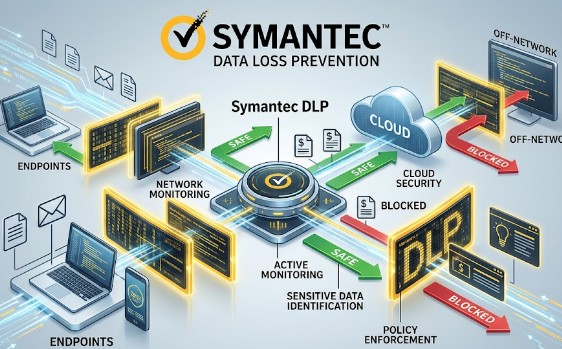
Gatemark suggests Broadcom’s Symantec DLP.
A system that:
. Monitors data across devices, email, networks, and cloud apps.
. Finds and classifies sensitive information like customer details or financial records.
. Applies consistent policies across all systems and channels.
. Tracks user and device activity to detect risky behavior.
. Controls how data is accessed, shared, or moved to prevent leaks.
Are there cons to this system? Yes, quite a few.
The system:
. Can be complex to set up and manage.
. May slow down some workflows or systems.
. Requires regular updates and monitoring to stay effective.
. May generate false alerts that need investigation.
. Can be expensive for smaller organizations.
But..
Despite Symantec DLP’s cons, its pros prove to be of greater worth because it keeps sensitive information safe and under control.
So..
As an organization, where would you place your confidence when it comes to protecting your data?
Thanks for reading!
Loved this post and would love to learn more? Click below to subscribe.